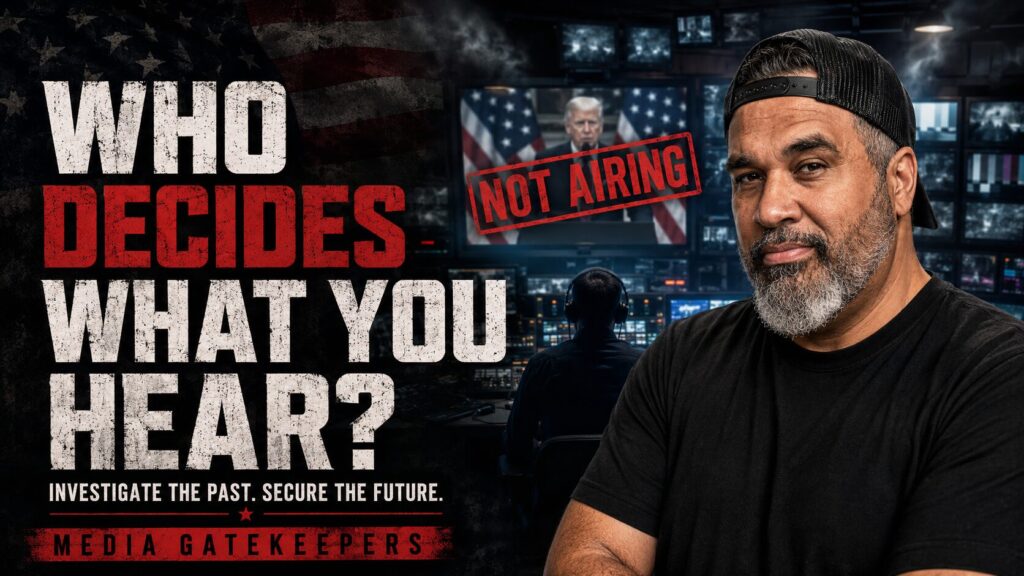
When major television networks decide not to carry a presidential speech live, the decision deserves public scrutiny.
The recent controversy surrounding CNN Trump election speech censorship is not simply about Donald Trump, the 2020 election, or whether every claim made during the speech was accurate. It raises a broader question about the role of the press in a free society:
Should news organizations give Americans direct access to important political speeches, or should they decide in advance what the public can be trusted to hear?
Several major networks declined to carry Trump’s election-related speech live on their primary television channels. Some provided digital or streaming access, but the editorial message was still clear: network executives would monitor the speech, evaluate the claims and later present viewers with their own reporting and interpretation.
That approach may be legally permissible, but it is also troubling.
Journalism Should Challenge Claims, Not Hide Them
News organizations have every right to fact-check politicians. In fact, that is one of their most important responsibilities.
If Trump makes an inaccurate statement, journalists should identify it. If he presents questionable evidence, they should examine it. If his argument falls apart under scrutiny, the public deserves to see exactly why.
However, fact-checking should not require shielding viewers from the original speech.
A healthy media organization should be able to air a political address and then immediately challenge its claims with evidence, context and expert analysis. Viewers are capable of hearing an argument and listening to criticism of that argument afterward.
The alternative creates an unhealthy relationship between the media and the public.
When a network says it will watch a speech instead of airing it live, the message can sound like this:
“We will decide what matters, what is accurate and what you need to know.”
That is not merely journalism. It begins to resemble information gatekeeping.
Americans Should Be Trusted to Think for Themselves
The controversy over CNN Trump election speech censorship reflects a growing disconnect between large media institutions and the people they claim to serve.
Many Americans no longer trust traditional news organizations because they believe stories are filtered through political, corporate and cultural interests before reaching the public.
Refusing to air a major speech can deepen that distrust.
The public should be allowed to hear political leaders directly, compare their statements with available evidence and form independent opinions. Networks should provide context, but they should not assume that viewers are incapable of evaluating information without being protected from it.
This principle should apply equally across political parties.
CNN should not decide what Americans are allowed to hear from Trump. Fox News should not decide what Americans are allowed to hear from a Democratic president. Media organizations should report, investigate and challenge political power without positioning themselves as the final authority over acceptable information.
Why the 2020 Election Still Deserves Examination
Much of the resistance to Trump’s speech is connected to his continued focus on the 2020 election.
Critics often argue that the country should simply move on. The election is over, the results were certified and continuing to discuss it only creates division.
But moving forward does not require ignoring the past.
If fraud occurred in any jurisdiction, it should be exposed. If election procedures were vulnerable, those weaknesses should be corrected. If rules were inconsistently applied or poorly communicated, lawmakers and election officials should address those failures before another election.
At the same time, unsupported or disproven allegations should also be identified honestly.
The objective should not be to prove Trump right or protect the reputation of major media organizations. The objective should be to determine what happened, separate facts from speculation and strengthen future elections.
Investigating past failures is how institutions improve.
When an airplane crashes, investigators do not dismiss the event because it happened in the past. They examine the evidence so that the same failure does not happen again.
Election systems should be treated with similar seriousness.
Trump accuses China of 2020 election interference
Election Integrity Requires Transparency
Trust in elections cannot be demanded. It must be earned.
That requires secure procedures, clear rules, transparent vote counting and meaningful access for observers. It also requires officials to answer legitimate questions rather than treating every question as an attack on democracy.
There is an important distinction between examining election vulnerabilities and declaring an entire election fraudulent without sufficient evidence.
Both sides of that distinction matter.
False claims can undermine confidence in elections. But refusing to investigate legitimate concerns can also undermine confidence. The strongest election system is one that can withstand public scrutiny because its processes are transparent and verifiable.
Americans should not be told to stop asking questions simply because those questions are politically inconvenient.
You do not build trust by demanding silence.
You build trust by providing answers.
Criticizing Trump Does Not Require Wanting Him to Fail
Opposing media gatekeeping does not require unconditional support for Donald Trump.
It is possible to believe that networks should have aired his speech while also strongly disagreeing with him on other issues.
I have serious concerns about the handling of information connected to Jeffrey Epstein and the possibility that powerful individuals may have been protected from accountability. Crimes against children and the protection of potential predators are not partisan issues. Political affiliation should never shield anyone from a legitimate investigation.
Because of that issue, I could not personally support Trump again at the ballot box.
However, that does not mean I want him to fail as president.
When a president fails, the consequences do not fall only on that president’s supporters. Economic instability, international conflict, government dysfunction and national decline affect everyone.
Wanting the president to succeed when he acts in the country’s best interests is not blind loyalty. Holding him accountable when he fails is not hatred.
Both positions can exist at the same time.
CNN Trump Election Speech Censorship Video
The Larger Problem Is Media Control
The debate surrounding CNN Trump election speech censorship is ultimately bigger than one speech or one politician.
It is about whether major media organizations still believe their role is to inform the public or manage the public.
Journalists should investigate powerful people. They should challenge misleading claims and expose dishonesty. They should also allow Americans to hear important statements in full whenever reasonably possible.
The answer to questionable speech is more reporting, more evidence and more transparency—not less access.
Americans do not need political networks to act as guardians of acceptable thought.
They need accurate information.
They need direct access to important public statements.
They need honest investigations that follow the evidence, even when the conclusions embarrass the media, political parties or government institutions.
Give the public the speech.
Give them the evidence.
Give them the fact-check.
Then trust them to decide what they believe.
That is what journalism should look like in a country that still values free thought.
Join Rock Nation – for real conversation and connections.