American History Uncovered: The Founding Fathers’ Religious Beliefs and Their Impact
When we think about the founding of America, we often focus on the political revolution, the Declaration of Independence, and the Constitution. But there’s another fascinating layer to explore: the complex religious landscape that shaped our nation’s earliest leaders. The Founding Fathers weren’t a monolithic group when it came to faith, and their diverse religious beliefs profoundly influenced the very foundation of American democracy.
Understanding these men’s spiritual convictions helps us grasp why they made certain decisions about religious freedom, separation of church and state, and the role of faith in public life. Their beliefs weren’t just personal matters—they became woven into the fabric of American governance and continue to influence our national conversations today.

The Religious Spectrum of America’s Founders
Contrary to popular belief, the Founding Fathers represented a remarkably diverse range of religious perspectives. While many Americans assume they were all devout Christians, the reality is far more nuanced and interesting.
Some founders were orthodox Christians who attended church regularly and held traditional beliefs. Others embraced Deism, a philosophical approach that acknowledged a creator but rejected organized religion’s supernatural elements. Still others fell somewhere in between, maintaining cultural connections to Christianity while questioning its doctrines.
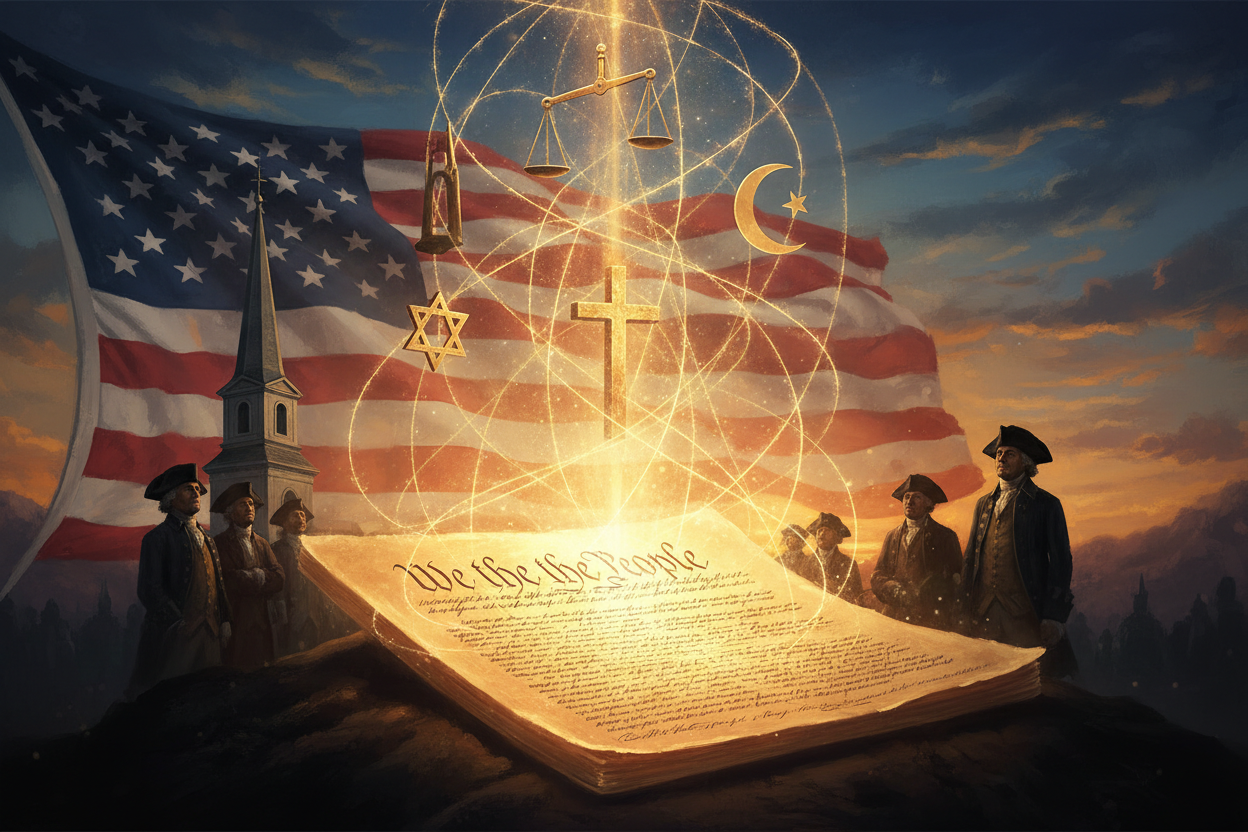
This religious diversity wasn’t accidental—it reflected the broader American colonial experience, where different denominations and beliefs had learned to coexist out of necessity. The founders understood firsthand how religious differences could either tear communities apart or, when handled wisely, contribute to a stronger, more resilient society.
George Washington: The Cautious Believer
George Washington’s religious beliefs have puzzled historians for centuries, and for good reason. The first president was remarkably private about his personal faith, rarely discussing it in detail even with close friends and family.
Washington regularly attended Episcopal services and served as a vestryman in his local church, suggesting conventional Christian practice. However, his private writings reveal a more complex picture. He frequently referred to “Divine Providence” and “the Almighty” rather than using specifically Christian terminology like “Jesus Christ” or “Savior.”
This careful language wasn’t accidental. Washington understood that as the nation’s first president, his religious expressions would set precedents for future leaders. His approach balanced personal faith with public inclusivity, demonstrating respect for religion while avoiding sectarian favoritism.
Washington’s famous letter to the Hebrew Congregation of Newport, Rhode Island, exemplifies this approach. He assured them that America would give “bigotry no sanction” and “persecution no assistance,” establishing an early precedent for religious tolerance that would influence American policy for generations.
Thomas Jefferson: The Philosophical Deist
Perhaps no founder’s religious views have been more debated than Thomas Jefferson’s. The primary author of the Declaration of Independence held beliefs that would have been considered radical by many of his contemporaries.
Jefferson was deeply influenced by Enlightenment thinking and embraced Deism—the belief that God created the universe but doesn’t intervene in human affairs through miracles or divine revelation. He viewed Jesus as a great moral teacher but rejected his divinity and the supernatural elements of Christianity.
This philosophical approach led Jefferson to create his own version of the New Testament, known as the “Jefferson Bible,” which removed all miraculous events and focused solely on Jesus’s ethical teachings. He believed that reason, not faith, should be humanity’s primary guide to truth.
Jefferson’s religious views directly influenced his political philosophy. His famous phrase about “a wall of separation between church and state” came from his understanding that government should neither promote nor hinder religious practice. This principle, born from his Deist convictions, became a cornerstone of American religious liberty.
John Adams: The Questioning Christian
John Adams represents another fascinating case study in founders’ religious complexity. Raised in the Congregationalist tradition, Adams maintained connections to Christianity throughout his life while developing increasingly liberal theological views.
Adams struggled with traditional Christian doctrines, particularly the Trinity, which he found philosophically problematic. He eventually embraced Unitarianism, believing in one God rather than the traditional Christian understanding of Father, Son, and Holy Spirit.
Despite these theological doubts, Adams recognized religion’s social value. He famously wrote that “our Constitution was made only for a moral and religious people” and worried about society’s stability without religious foundations. This tension between personal skepticism and public appreciation for religion’s role characterized many founders’ approaches.
Adams’s correspondence with Jefferson in their later years reveals two aging statesmen grappling with questions of faith, mortality, and meaning. Their letters show how the founders continued evolving in their religious thinking long after establishing the nation.
Benjamin Franklin: The Practical Believer
Benjamin Franklin approached religion with the same practical mindset he brought to science and politics. While he acknowledged God’s existence and believed in divine providence, Franklin was more interested in religion’s utility than its theological fine points.
Franklin attended various churches throughout his life but never committed fully to any denomination. He supported religious institutions financially because he believed they promoted virtue and social order, not necessarily because he agreed with their doctrines.
His approach to faith was remarkably pragmatic. Franklin once wrote that he found all religions useful when they encouraged good behavior and harmful when they promoted intolerance or superstition. This utilitarian view of religion influenced his support for religious freedom as a practical necessity for social harmony.
Franklin’s religious pragmatism extended to his diplomatic work. When serving as ambassador to France, he skillfully navigated the complex religious politics of Catholic France while representing a predominantly Protestant nation, demonstrating how religious flexibility could serve national interests.
Alexander Hamilton: The Convert’s Journey
Alexander Hamilton’s religious journey was perhaps the most dramatic among the founders. Born in the Caribbean and raised with minimal religious instruction, Hamilton’s faith evolved significantly throughout his life.
In his youth, Hamilton showed little interest in organized religion, focusing instead on his meteoric political and financial career. However, personal tragedies, including the death of his eldest son in a duel, led him to embrace Christianity more seriously in his later years.
Hamilton’s religious evolution influenced his political thinking, particularly regarding the relationship between morality and governance. He came to believe that republican government required citizens with strong moral foundations, which he increasingly saw as rooted in religious faith.
His tragic death in a duel with Aaron Burr occurred just as Hamilton was deepening his Christian commitments, leaving historians to wonder how his mature religious views might have influenced American development had he lived longer.
James Madison: The Careful Constitutionalist
James Madison, often called the “Father of the Constitution,” brought a unique perspective to questions of religion and government. Raised as an Anglican but influenced by Enlightenment thinking, Madison developed a sophisticated understanding of religious liberty’s importance.
Madison’s approach to religion was shaped by his witnessing religious persecution in Virginia, where Baptist ministers were imprisoned for preaching without licenses. These experiences convinced him that government involvement in religious affairs inevitably led to oppression and social discord.
His “Memorial and Remonstrance Against Religious Assessments” argued that religious belief must be entirely voluntary to be meaningful. This principle guided his work on the First Amendment, which he crafted to protect both religious exercise and prevent government establishment of religion.
Madison’s personal faith remained private, but his public commitment to religious freedom was absolute. He understood that protecting minority religious rights was essential for maintaining majority religious freedom as well.
The Collective Impact on American Democracy
The founders’ diverse religious beliefs created a unique approach to faith and government that distinguished America from other nations. Rather than establishing a single state religion or promoting atheism, they created space for multiple religious traditions to coexist and flourish.
This religious diversity among the founders had several crucial impacts on American development. First, it prevented any single denomination from claiming exclusive influence over government policy. Second, it established precedents for religious tolerance that would expand over time to include faiths the founders never encountered.
The founders’ approach also created productive tension between religious and secular influences in American life. Rather than viewing faith and reason as incompatible, many founders saw them as complementary forces that could both contribute to human flourishing and social progress.
Their religious diversity also influenced American foreign policy approaches. Having leaders with different faith perspectives helped the young nation navigate relationships with both Protestant and Catholic European powers, as well as the Islamic states of North Africa.
Modern Implications and Ongoing Debates
The founders’ religious beliefs continue influencing American political and social debates today. Questions about prayer in schools, religious symbols in public spaces, and faith-based policy positions often invoke the founders’ intentions and beliefs.
However, applying 18th-century religious perspectives to 21st-century issues requires careful consideration. The founders lived in a predominantly Christian culture and couldn’t have anticipated America’s current religious diversity, including significant Muslim, Hindu, Buddhist, and non-religious populations.
What remains relevant is the founders’ commitment to protecting both religious exercise and preventing government establishment of religion. Their approach created frameworks flexible enough to accommodate changing religious landscapes while maintaining core principles of liberty and equality.
Understanding the founders’ religious complexity also helps modern Americans appreciate that faith and politics have always intersected in complicated ways. Rather than seeking simple answers to complex questions, we might follow the founders’ example of thoughtful engagement with different perspectives.
Conclusion: Legacy of Religious Wisdom
The Founding Fathers’ religious beliefs were far more complex and diverse than popular narratives suggest. Rather than representing a single faith tradition, they embodied the religious pluralism that would become one of America’s defining characteristics.
Their diverse approaches to faith—from Washington’s cautious reverence to Jefferson’s philosophical Deism, from Adams’s questioning Christianity to Franklin’s practical belief—created a rich foundation for American religious liberty. They understood that protecting religious freedom required both preventing government establishment of religion and ensuring individuals could practice their faith freely.
Perhaps most importantly, the founders demonstrated that people with different religious beliefs could work together effectively for the common good. Their example reminds us that religious diversity need not be a source of division but can instead contribute to a stronger, more vibrant democracy.
As we continue grappling with questions of faith and public life, the founders’ religious wisdom offers valuable guidance. They showed us that respecting religious differences while maintaining shared civic commitments isn’t just possible—it’s essential for preserving the liberty and justice they fought to establish.