American History Revisited: Conservative Heroes Often Overlooked in Textbooks
When I first started digging into American history beyond what my high school textbooks taught me, I was surprised to discover how many fascinating conservative figures had been glossed over or completely omitted from the standard curriculum. It’s not that these individuals were unimportant – quite the opposite. Many of them played crucial roles in shaping our nation’s founding principles, defending constitutional values, and promoting individual liberty throughout American history.
The reality is that mainstream educational materials often present a simplified narrative that doesn’t capture the full spectrum of American political thought. While progressive figures certainly deserve their place in history, there’s a rich tradition of conservative thinkers, leaders, and activists who have made equally significant contributions to our nation’s development. Let’s explore some of these overlooked heroes and understand why their stories matter in today’s political landscape.
The Founding Era: More Than Just the Famous Names
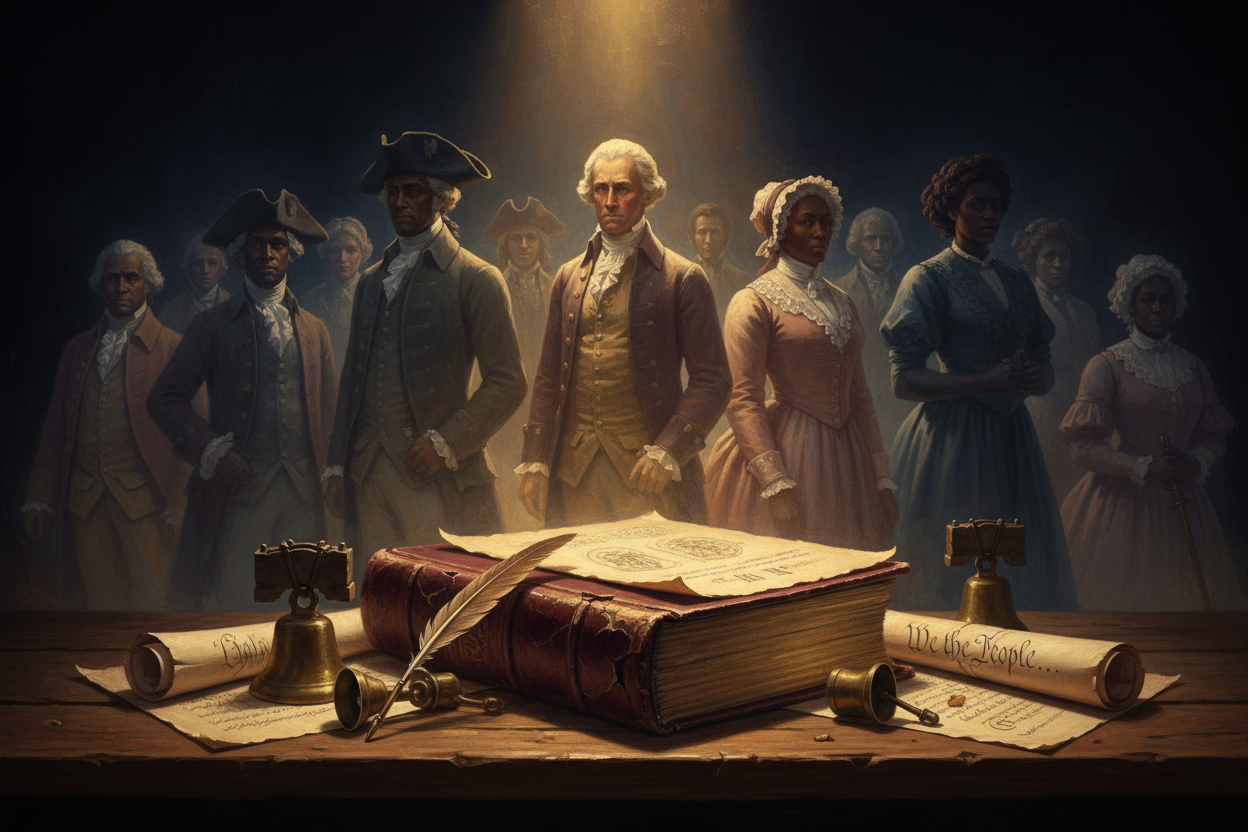
Most Americans know about George Washington, Thomas Jefferson, and Benjamin Franklin, but the founding generation included numerous conservative thinkers whose ideas continue to influence American politics today. Take John Jay, for instance – one of the authors of the Federalist Papers and the first Chief Justice of the United States. Jay’s commitment to strong federal institutions and the rule of law helped establish the judicial branch as a co-equal branch of government.
Then there’s Gouverneur Morris, the man who actually penned the final draft of the Constitution. Morris believed strongly in limited government, property rights, and the importance of moral character in public life. His elegant prose gave us the famous opening words “We the People,” yet his broader philosophy of constitutional conservatism rarely gets the attention it deserves in classroom discussions.

Fisher Ames, a Federalist congressman from Massachusetts, deserves recognition for his eloquent defense of constitutional principles and his warnings about the dangers of pure democracy without institutional safeguards. His speeches and writings reveal a sophisticated understanding of how to balance popular will with minority rights – a challenge that remains relevant today.
Forgotten Champions of Individual Liberty
The 19th century produced several conservative figures who fought tirelessly for individual rights, often in ways that challenge modern stereotypes about conservative politics. Lysander Spooner, a radical individualist and constitutional lawyer, opposed slavery on libertarian grounds long before the Civil War. His pamphlet “The Unconstitutionality of Slavery” made a powerful legal and moral case against the institution based on natural rights theory.
Spooner didn’t stop there – he also challenged government monopolies, founded his own postal service to compete with the federal post office, and argued that individuals had the right to ignore unjust laws. His brand of constitutional conservatism emphasized personal freedom and limited government in ways that influenced later libertarian thought.
Another overlooked figure is Ida B. Wells-Barnett, whose conservative approach to civil rights emphasized self-reliance, armed self-defense, and economic empowerment. While she’s sometimes mentioned in discussions of civil rights history, her conservative methodology – including her advocacy for the Second Amendment rights of African Americans – often gets downplayed in favor of more collectivist approaches to social change.
Business Leaders Who Built America
The Gilded Age entrepreneurs who built America’s industrial infrastructure are often portrayed as villains in standard textbooks, but many of them embodied conservative principles of hard work, innovation, and philanthropy that deserve recognition. Andrew Carnegie, despite his sometimes ruthless business practices, gave away virtually his entire fortune and wrote extensively about the moral obligations of wealth.
Henry Ford revolutionized manufacturing and paid his workers well above market wages, believing that prosperity should be shared. His innovations made automobiles affordable for ordinary Americans and demonstrated how free market capitalism could improve living standards for everyone. Yet textbooks often focus more on labor disputes than on his genuine contributions to American prosperity.
Madam C.J. Walker, America’s first female self-made millionaire, built her cosmetics empire through entrepreneurship and determination. Her success story exemplifies conservative values of self-reliance and individual achievement, while her philanthropy showed how private charity could address social problems more effectively than government programs.
Conservative Intellectuals and Their Lasting Impact
The 20th century produced a remarkable generation of conservative thinkers whose ideas continue to shape American politics, yet many students graduate without ever encountering their work. Russell Kirk, author of “The Conservative Mind,” articulated a sophisticated philosophy of traditional conservatism that emphasized custom, continuity, and the importance of moral order in society.
Kirk’s influence extended far beyond academic circles – he mentored countless young conservatives and helped establish the intellectual foundations of the modern conservative movement. His concept of the “permanent things” – those enduring truths and institutions that give life meaning – offers a compelling alternative to the constant change and disruption that characterizes modern life.
William F. Buckley Jr. deserves recognition not just as a political commentator but as someone who elevated the level of public discourse through his television show “Firing Line” and his magazine “National Review.” Buckley demonstrated that conservative ideas could be both intellectually rigorous and accessible to ordinary Americans.
Thomas Sowell, the brilliant economist and social theorist, has spent decades challenging conventional wisdom about poverty, race, and economic policy. His empirical approach to social problems and his emphasis on unintended consequences have influenced policy debates for generations, yet his work rarely appears in high school curricula.
Military Heroes and Their Conservative Values
American military history is filled with conservative heroes whose service exemplified traditional values of duty, honor, and sacrifice. General Curtis LeMay, despite being a controversial figure, played a crucial role in ending World War II and later helped develop America’s strategic nuclear deterrent during the Cold War. His commitment to national defense and his understanding of military strategy helped preserve American freedom during some of our most dangerous moments.
Colonel John Boyd, the fighter pilot and military strategist who developed the OODA loop (Observe, Orient, Decide, Act), revolutionized military thinking and influenced everything from business strategy to personal development. Boyd’s emphasis on adaptation, speed, and individual initiative reflects conservative principles about the importance of personal responsibility and quick decision-making.
These military leaders understood that freedom isn’t free – it requires constant vigilance and sometimes requires force to defend. Their stories remind us that conservative values have often been tested in the crucible of combat, where abstract principles become matters of life and death.
Why These Stories Matter Today
Understanding the full spectrum of American conservative thought isn’t just about historical accuracy – it’s about having a complete picture of the ideas and values that have shaped our nation. When students only learn about one side of American political development, they miss important lessons about the ongoing tension between different visions of freedom, government, and society.
These conservative heroes offer valuable insights into alternative approaches to solving social problems. Instead of always looking to government for solutions, they emphasized the importance of civil society, private charity, individual initiative, and moral character. Their examples show that conservative principles have often been at the forefront of positive social change.
Moreover, many of these figures were complex individuals who don’t fit neatly into contemporary political categories. Studying their lives and ideas can help us move beyond simplistic partisan narratives and develop a more nuanced understanding of American political thought.
Conclusion: Reclaiming Our Full Heritage
American history is far richer and more complex than any single textbook can capture, but that’s no excuse for systematically overlooking conservative contributions to our national story. The figures discussed here – from Founding Era statesmen to modern intellectuals – have played crucial roles in developing and defending the principles that make America unique.
By learning about these overlooked heroes, we gain a better understanding of the conservative tradition in American politics and the ongoing relevance of their ideas. Whether you agree with their politics or not, their stories are part of our shared heritage and deserve to be told with the same care and attention given to other historical figures.
As we continue to debate the future direction of our country, we would do well to remember the wisdom of those who came before us – including those conservative voices that have been too often forgotten or ignored. Their insights into human nature, limited government, and individual liberty remain as relevant today as they were in their own time.