America First Economics: Protectionism vs. Free Trade Throughout US History
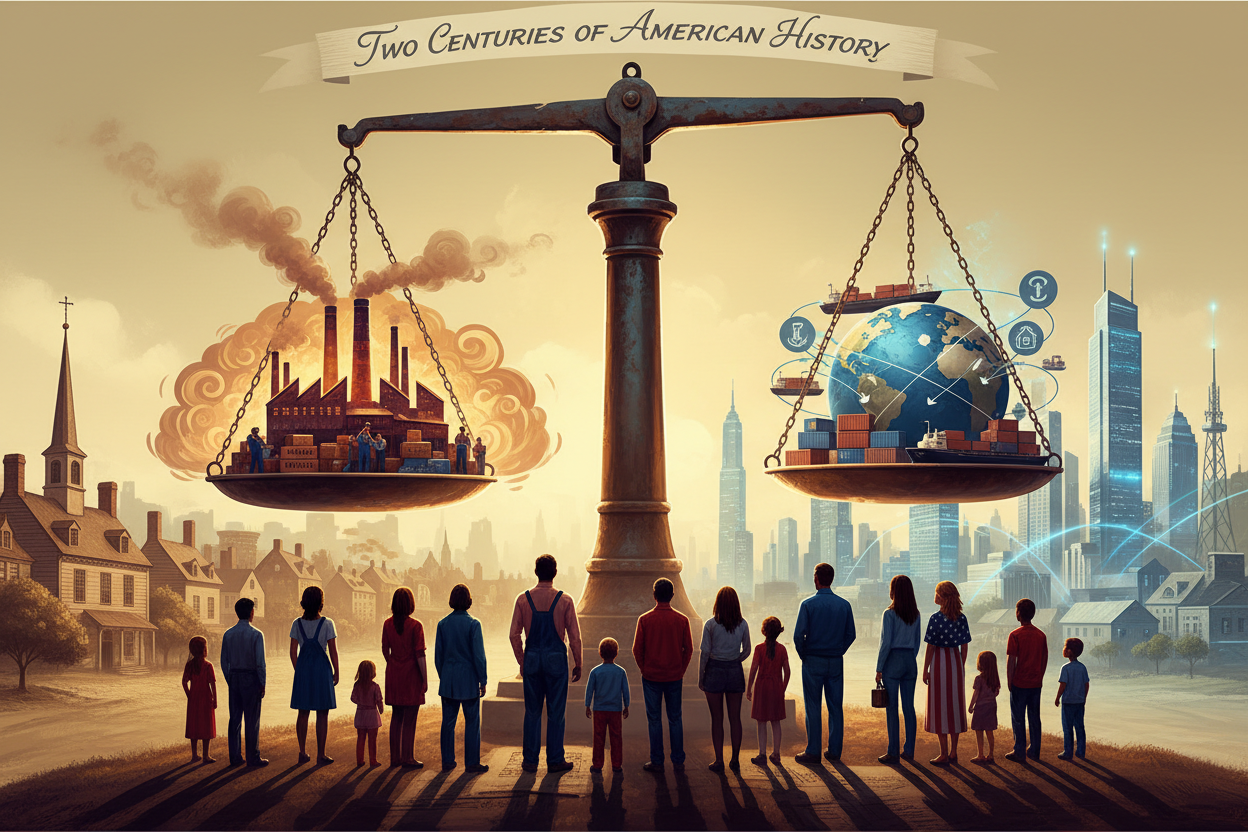
The debate between protectionism and free trade has shaped American economic policy for over two centuries, influencing everything from the price of your morning coffee to the availability of jobs in manufacturing towns across the Midwest. This fundamental economic tension has created winners and losers, sparked political movements, and continues to dominate headlines today. Understanding this historical tug-of-war isn’t just academic exercise—it’s essential for grasping why your grocery bill fluctuates and why some communities thrive while others struggle.
From Alexander Hamilton’s early industrial vision to modern trade wars, America’s relationship with international commerce has been anything but straightforward. The pendulum has swung between protecting domestic industries and embracing global markets, often reflecting the political and economic pressures of each era. Let’s explore how these competing philosophies have shaped the nation we know today.
The Foundations of American Trade Policy
When the United States emerged as an independent nation, its founders faced a crucial question: how should this new country engage with the global economy? Alexander Hamilton, the first Secretary of the Treasury, had strong opinions on the matter. His “Report on Manufactures” in 1791 laid the groundwork for what we now recognize as protectionist policy, arguing that infant American industries needed shelter from established European competitors.
Hamilton’s vision wasn’t born in a vacuum. He witnessed firsthand how British manufacturers could undercut American producers, potentially keeping the new nation dependent on foreign goods indefinitely. His solution? Strategic tariffs that would give American businesses breathing room to develop and compete. This wasn’t just economic theory—it was nation-building through trade policy.
The early tariff acts, including the Tariff of 1789, established precedents that would echo through American history. These weren’t merely revenue-generating measures; they represented a conscious choice to prioritize domestic economic development over the theoretical benefits of unrestricted trade. The message was clear: America would chart its own economic course, even if it meant paying higher prices in the short term.
The Great Tariff Debates of the 19th Century
The 1800s witnessed some of the most heated trade debates in American history, with regional interests often driving policy positions. The North, with its growing manufacturing base, generally favored protective tariffs that shielded their products from foreign competition. Meanwhile, the agricultural South preferred free trade policies that would keep the cost of manufactured goods low and maintain good relationships with cotton-buying nations abroad.
The Tariff of Abominations in 1828 perfectly illustrated these tensions. Northern manufacturers celebrated the high duties on imported goods, while Southern planters fumed about increased costs for everything from farm equipment to household items. South Carolina’s nullification crisis emerged directly from this trade dispute, nearly tearing the young nation apart over economic policy.
These weren’t abstract policy disagreements—they affected real families and communities. A blacksmith in Pennsylvania might thrive under protective tariffs, while a cotton farmer in Georgia struggled with higher costs for tools and supplies. The human cost of trade policy became increasingly apparent as different regions prospered or suffered based on these decisions.
The Civil War temporarily settled some trade debates, but the underlying tensions remained. Post-war America saw the rise of powerful industrial interests that strongly advocated for continued protection, setting the stage for the Gilded Age’s complex relationship with international trade.
Industrial Revolution and Protection
America’s rapid industrialization in the late 1800s coincided with some of the highest tariff rates in the nation’s history. The McKinley Tariff of 1890 and the Dingley Tariff of 1897 pushed average tariff rates above 40%, creating what amounted to a protective wall around American industry.
This period saw the emergence of industrial giants like Andrew Carnegie and John D. Rockefeller, who built their empires partly behind the shelter of protective tariffs. Steel production soared, railroad networks expanded, and American manufacturing began to rival European competitors. The strategy appeared to be working—but at what cost?
Workers in protected industries often enjoyed higher wages and more stable employment, but consumers paid premium prices for goods that might have been cheaper if imported. Farmers, still a significant portion of the population, found themselves caught between higher costs for manufactured goods and international competition for their agricultural products.
The Panic of 1893 highlighted some vulnerabilities in this approach. High tariffs might protect jobs in good times, but they couldn’t prevent economic downturns caused by other factors. Critics began questioning whether protection was creating artificial prosperity that couldn’t survive in a truly competitive global market.
The Progressive Era Shift
The early 1900s brought new voices to the trade debate, with progressives arguing that high tariffs primarily benefited wealthy industrialists at the expense of ordinary consumers. President Woodrow Wilson championed this view, successfully pushing through the Underwood Tariff of 1913, which significantly reduced tariff rates for the first time in decades.
Wilson’s approach reflected a growing belief that competition, not protection, would ultimately make American industry stronger and more innovative. The outbreak of World War I temporarily overshadowed these debates, but the underlying philosophical shift toward freer trade had begun.
This period also saw the establishment of the Federal Reserve System and the introduction of the federal income tax, both of which reduced the government’s reliance on tariff revenue. For the first time since the nation’s founding, trade policy could be divorced from the immediate need to fund government operations.
The Smoot-Hawley Disaster and Its Lessons
The 1930s provided a stark lesson in the dangers of excessive protectionism. The Smoot-Hawley Tariff Act of 1930, passed in response to the Great Depression, raised tariffs on thousands of imported goods to record levels. The intention was to protect American jobs and industries during economic hardship, but the results were catastrophic.
Other nations retaliated with their own tariffs, creating a downward spiral of international trade that deepened and prolonged the global depression. American exports plummeted, and the very industries the tariffs were meant to protect found themselves cut off from international markets. Farmers, who had initially supported some protections, watched their export markets disappear almost overnight.
The human toll was immense. Unemployment soared, businesses failed, and entire communities that depended on international trade withered. The Dust Bowl farmers who might have sold grain abroad found no buyers, while factory workers in export industries lost their jobs despite the tariff “protection.”
This experience fundamentally changed how American policymakers viewed trade. The lesson seemed clear: in an interconnected world economy, protectionism could backfire spectacularly, harming the very people it was meant to help.
Post-War Free Trade Consensus
World War II and its aftermath ushered in a new era of American leadership in promoting international free trade. The Bretton Woods system, the General Agreement on Tariffs and Trade (GATT), and later the World Trade Organization reflected a bipartisan consensus that open markets would promote both prosperity and peace.
Presidents from both parties embraced this approach. Harry Truman, Dwight Eisenhower, John F. Kennedy, and their successors generally supported reducing trade barriers and integrating the American economy with the world. The results were impressive: decades of economic growth, rising living standards, and American companies becoming global leaders in numerous industries.
The benefits weren’t evenly distributed, however. While consumers enjoyed access to cheaper goods and many industries thrived in global markets, some traditional manufacturing centers began to struggle. The seeds of future trade debates were being planted even during this era of apparent consensus.
The establishment of the European Economic Community and later the European Union also created new competitive pressures and opportunities, forcing American policymakers to think more strategically about trade relationships and economic blocs.
Modern Trade Wars and Economic Nationalism
The 21st century has witnessed a dramatic revival of protectionist sentiment in American politics. The North American Free Trade Agreement (NAFTA), while supported by business leaders and many economists, became a lightning rod for criticism from workers who saw their jobs migrate to Mexico. The “giant sucking sound” that Ross Perot predicted in 1992 seemed to materialize in communities across the Rust Belt.
China’s entry into the World Trade Organization in 2001 accelerated these trends. American consumers benefited from cheaper goods, but the “China shock” devastated many manufacturing communities. Towns that had thrived for generations making furniture, textiles, or steel products found themselves unable to compete with low-cost imports.
The 2016 election brought these tensions to a head, with Donald Trump successfully campaigning on promises to renegotiate trade deals and impose tariffs on countries he accused of unfair trade practices. His administration’s trade war with China, involving hundreds of billions of dollars in tariffs, represented the most significant shift toward protectionism since the 1930s.
The COVID-19 pandemic added new dimensions to these debates, highlighting American dependence on foreign suppliers for critical goods like medical equipment and pharmaceuticals. Suddenly, arguments about supply chain resilience and national security carried new urgency, even among traditional free trade advocates.
The Human Cost of Trade Policy
Behind every trade statistic lies a human story. The steel worker in Pittsburgh whose plant closed due to foreign competition faces the same uncertainty as the farmer in Iowa whose soybean exports are blocked by retaliatory tariffs. These aren’t abstract economic concepts—they’re family breadwinners trying to adapt to forces largely beyond their control.
Consider the textile worker in North Carolina who lost her job when production moved overseas, or the software engineer in Silicon Valley whose company thrives on global markets. Their experiences with trade policy couldn’t be more different, yet both are shaped by the same fundamental decisions about America’s relationship with the global economy.
The challenge for policymakers is balancing these competing interests while maintaining America’s overall economic competitiveness. It’s a task that requires both economic sophistication and deep empathy for those caught in the crosscurrents of global change.
Finding Balance in a Global Economy
Today’s trade debates echo themes that have persisted throughout American history, but they occur in a fundamentally different context. Global supply chains, digital commerce, and international financial markets create interdependencies that would have been unimaginable to Alexander Hamilton or even Franklin Roosevelt.
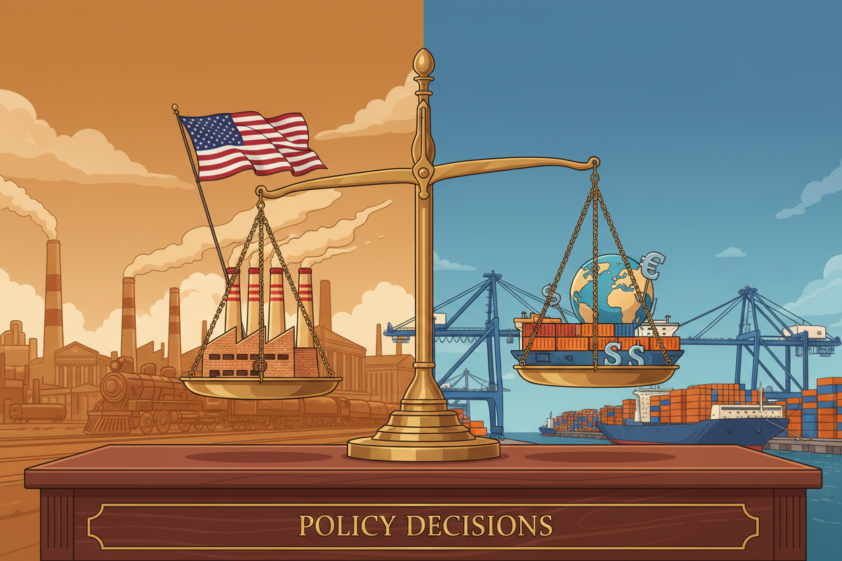
The challenge isn’t simply choosing between protectionism and free trade—it’s crafting policies that harness the benefits of global commerce while protecting American workers and communities from its disruptive effects. This might involve targeted assistance for displaced workers, strategic investments in education and infrastructure, or carefully designed trade agreements that include labor and environmental protections.
Some economists advocate for “smart protectionism” that shields critical industries or emerging technologies while maintaining open markets elsewhere. Others argue for doubling down on free trade while dramatically expanding programs to help workers adapt to economic change. The debate continues, but the stakes have never been higher.
The rise of economic nationalism worldwide, from Brexit to trade tensions between major powers, suggests that the post-war consensus on free trade may be fracturing. America’s response to these challenges will likely shape not just its own economic future, but the entire global trading system.
Throughout more than two centuries of American history, the tension between protectionism and free trade has reflected deeper questions about national identity, economic justice, and America’s role in the world. From Hamilton’s infant industries to today’s supply chain vulnerabilities, each generation has grappled with how to balance domestic priorities with global opportunities. The answers have varied dramatically, often reflecting the political and economic pressures of their time, but the fundamental challenge remains constant: how can America prosper in a competitive global economy while ensuring that prosperity reaches all its citizens? As we face new challenges from technological disruption to geopolitical competition, understanding this historical context becomes more crucial than ever. The future of American trade policy will undoubtedly continue to evolve, but the lessons of the past provide essential guidance for navigating the complexities ahead.