
The Case for Christ
How Archaeological Evidence Supports Biblical Narratives in American History
Throughout American history, the relationship between faith and historical evidence has sparked countless debates in academic circles, courtrooms, and coffee shops across the nation. While some view biblical accounts as purely matters of faith, a growing body of archaeological discoveries continues to shed light on the historical accuracy of many biblical narratives. From the dusty excavation sites of the Middle East to the halls of American universities, researchers are uncovering evidence that supports the historical foundation of Christianity—evidence that has profoundly influenced American culture and thought for centuries.
The intersection of archaeology and biblical studies isn’t just an academic exercise; it’s a journey that has captivated American scholars, theologians, and everyday believers since the nation’s founding. As we explore this fascinating relationship, we’ll discover how archaeological findings have strengthened the case for Christ’s historical existence and the reliability of biblical accounts that have shaped American values and traditions.
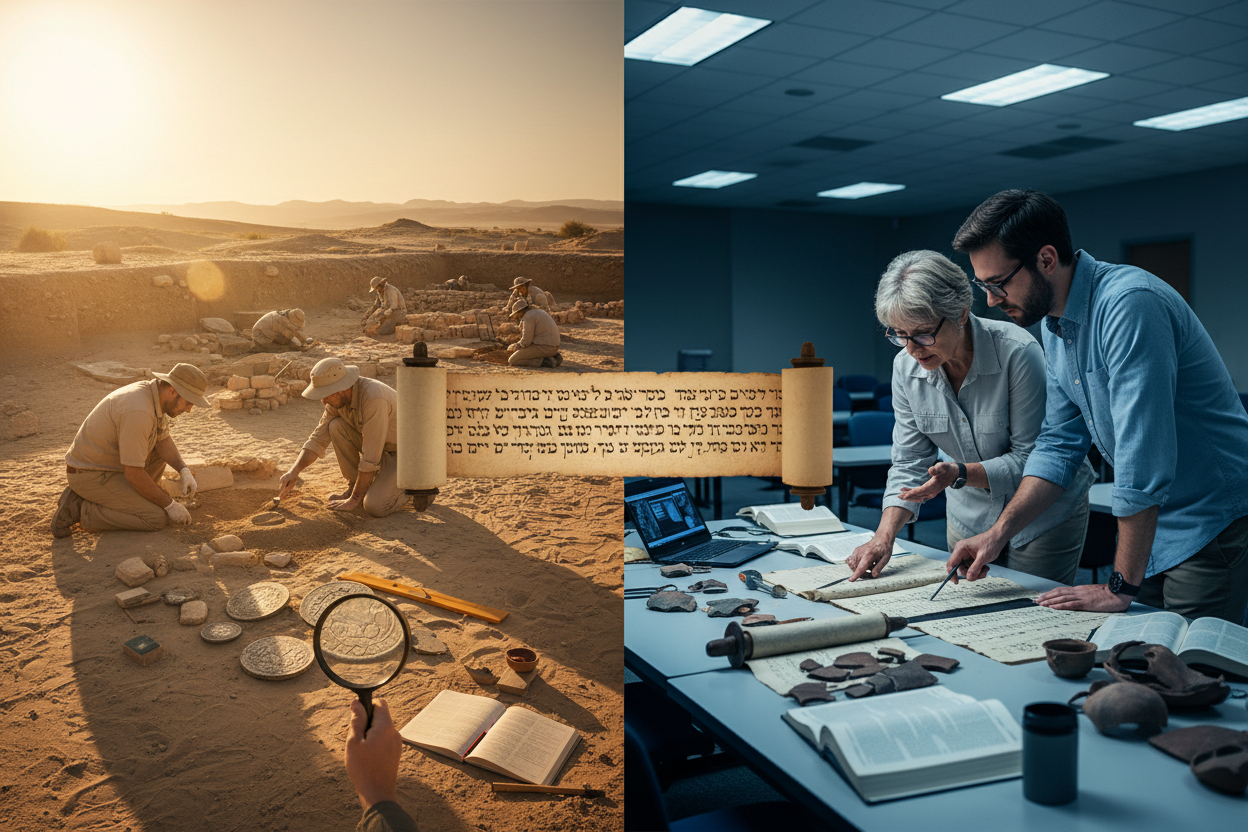
The Historical Foundation of Biblical Archaeology in America
American interest in biblical archaeology dates back to the 19th century, when pioneering scholars began systematic excavations in the Holy Land. The establishment of institutions like the American Schools of Oriental Research in 1900 marked a turning point in how Americans approached biblical studies. These early archaeologists weren’t just digging for artifacts; they were searching for connections between ancient texts and tangible evidence.
The influence of these discoveries on American religious thought cannot be overstated. As archaeological evidence began supporting biblical narratives, it provided intellectual ammunition for those defending Christianity against the rising tide of skepticism that accompanied the Industrial Revolution and scientific advancement. This evidence became particularly important in American educational institutions, where the battle between faith and reason often played out in heated debates.

What makes this story uniquely American is how these archaeological discoveries were interpreted and integrated into the nation’s religious landscape. Unlike European approaches that often remained purely academic, American scholars and religious leaders actively used archaeological evidence to strengthen evangelical movements and missionary work both domestically and abroad.
Key Archaeological Discoveries Supporting New Testament Narratives
The archaeological record has yielded remarkable discoveries that support the historical accuracy of New Testament accounts. One of the most significant finds was the Pilate Stone, discovered in Caesarea Maritima in 1961. This limestone inscription definitively proves the existence of Pontius Pilate as the Roman prefect of Judea, exactly as described in the Gospel accounts of Jesus’s crucifixion.
The discovery of Caiaphas’s ossuary in 1990 provided another crucial piece of evidence. This ornate bone box, bearing the inscription “Joseph son of Caiaphas,” likely belonged to the high priest who presided over Jesus’s trial. For American Christians, these discoveries weren’t just academic curiosities—they were confirmations of faith that had been passed down through generations.
Perhaps even more compelling is the archaeological evidence supporting the Gospel of Luke’s historical accuracy. Luke’s detailed knowledge of first-century political structures, geographical locations, and cultural practices has been consistently validated by archaeological discoveries. The Pool of Bethesda, mentioned in John’s Gospel, was long considered fictional until excavations in Jerusalem revealed a pool matching the biblical description exactly.
The Dead Sea Scrolls: America’s Role in Biblical Manuscript Discovery
When Bedouin shepherds discovered the Dead Sea Scrolls in 1947, American institutions played a crucial role in acquiring, studying, and preserving these ancient manuscripts. The scrolls revolutionized biblical scholarship by providing manuscripts of Hebrew Bible texts that were over 1,000 years older than any previously known copies.
American universities and museums, including the Oriental Institute at the University of Chicago and the Huntington Library, became centers for Dead Sea Scroll research. These institutions invested millions of dollars in scroll acquisition and study, reflecting America’s deep commitment to biblical archaeology. The scrolls confirmed the remarkable accuracy of biblical transmission over centuries, strengthening arguments for the reliability of both Old and New Testament texts.
The impact on American Christianity was profound. Churches across the country organized special exhibitions and lectures about the scrolls, and many believers saw them as divine confirmation of biblical accuracy. This enthusiasm reflected a uniquely American approach to integrating archaeological discoveries with popular religious culture.
Archaeological Evidence for Jesus’s Historical Existence
While no direct archaeological evidence of Jesus himself has been discovered—which isn’t surprising given his humble social status—the archaeological record strongly supports the historical context of his life and ministry. Excavations in Nazareth have revealed a first-century Jewish village exactly matching the Gospel descriptions, complete with stone vessels used for Jewish purification rituals.
The discovery of a first-century fishing boat in the Sea of Galilee, dubbed the “Jesus Boat,” provides tangible evidence of the maritime culture described in the Gospels. American archaeologists and biblical scholars have studied this vessel extensively, noting how its construction and size align perfectly with Gospel accounts of Jesus’s ministry around the Sea of Galilee.
Recent excavations in Capernaum, Jesus’s adopted hometown, have uncovered a first-century synagogue beneath the later Byzantine structure. This discovery supports Gospel accounts of Jesus teaching in Capernaum’s synagogue and provides insight into the religious environment of his ministry. American archaeological teams have been instrumental in these excavations, bringing advanced techniques and substantial funding to the projects.
Challenges and Scholarly Debates in Biblical Archaeology
Not all archaeological discoveries have provided clear-cut support for biblical narratives, and American scholars have been at the forefront of honest academic debate about controversial findings. The James Ossuary, initially hailed as containing the bones of Jesus’s brother, faced intense scrutiny when questions arose about the authenticity of its inscription. This controversy highlighted the importance of rigorous scientific analysis in biblical archaeology.
American institutions have also grappled with the challenge of maintaining scholarly objectivity while studying texts considered sacred by many. The Society of Biblical Literature, headquartered in the United States, has worked to establish standards that respect both academic integrity and religious sensitivity.
Some discoveries have challenged traditional interpretations while supporting broader biblical themes. For instance, archaeological evidence suggests that ancient Israel’s religious practices were more diverse than previously thought, leading to nuanced discussions about how archaeological findings should inform biblical interpretation.
Modern Technology and Future Discoveries
American technological innovation has revolutionized biblical archaeology in recent decades. Ground-penetrating radar, satellite imagery, and advanced dating techniques developed by American companies and universities have opened new possibilities for discovery. These tools have allowed archaeologists to explore sites that were previously inaccessible or to reexamine existing sites with greater precision.
The use of DNA analysis on ancient remains has provided new insights into the population movements and cultural exchanges described in biblical texts. American laboratories have been pioneers in applying these techniques to archaeological samples from biblical sites.
Digital archaeology, led by American institutions, is creating detailed 3D models of biblical sites and artifacts. These digital reconstructions allow scholars and the public to experience ancient biblical locations in unprecedented detail, bringing archaeological evidence to life for new generations of Americans.
The Impact on American Faith and Culture
Archaeological evidence supporting biblical narratives has profoundly influenced American religious culture. Many American churches have incorporated archaeological findings into their teaching, using discoveries to strengthen congregational faith and attract skeptics. Christian colleges and universities across the United States have developed robust biblical archaeology programs, training new generations of scholars.
The popularity of biblical archaeology among American Christians has also supported a thriving industry of Holy Land tours, archaeological documentaries, and educational materials. This enthusiasm reflects a distinctly American approach to faith that values both spiritual conviction and intellectual evidence.
However, the relationship between archaeology and faith remains complex. While some discoveries have strengthened belief, others have required believers to refine their understanding of biblical texts. American religious leaders have generally embraced this process, viewing archaeological discoveries as opportunities for deeper spiritual and intellectual engagement with their faith.
Conclusion: Continuing the Archaeological Quest
The case for Christ through archaeological evidence continues to evolve as new discoveries emerge from ongoing excavations across the biblical world. American institutions, scholars, and believers have played a crucial role in this ongoing quest, contributing both resources and expertise to the field of biblical archaeology.
While archaeology cannot prove matters of faith, it has consistently demonstrated the historical reliability of biblical narratives and the solid historical foundation underlying Christian beliefs. For many Americans, these discoveries provide intellectual confidence that complements spiritual faith, creating a robust foundation for belief that engages both heart and mind.
As we look toward the future, new technologies and continued excavations promise to reveal even more about the historical context of biblical events. The American commitment to biblical archaeology ensures that this nation will continue to play a leading role in uncovering evidence that illuminates the historical foundations of Christianity.
The intersection of faith and archaeology in American culture demonstrates our nation’s unique ability to embrace both spiritual conviction and scientific inquiry. As we continue to dig deeper into the past, we may well discover that the case for Christ grows stronger with each shovelful of ancient soil carefully examined by dedicated archaeologists and scholars.
Join Rock Nation – honest conversations and real connections